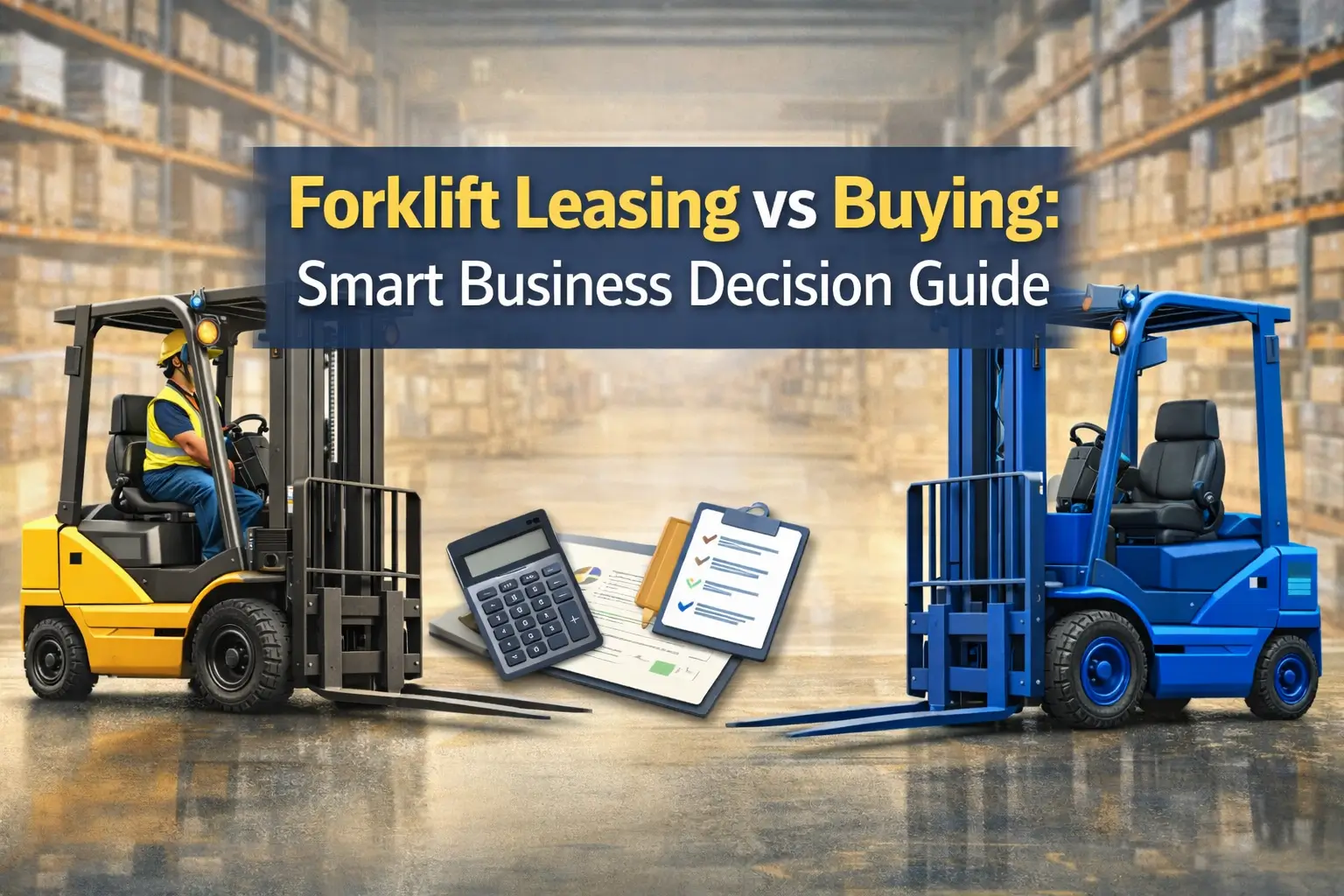
When it comes to material handling equipment, one of the most critical decisions businesses face is Forklift Leasing vs Buying. This choice impacts not only your upfront costs but also long-term financial flexibility, operational efficiency, and scalability.
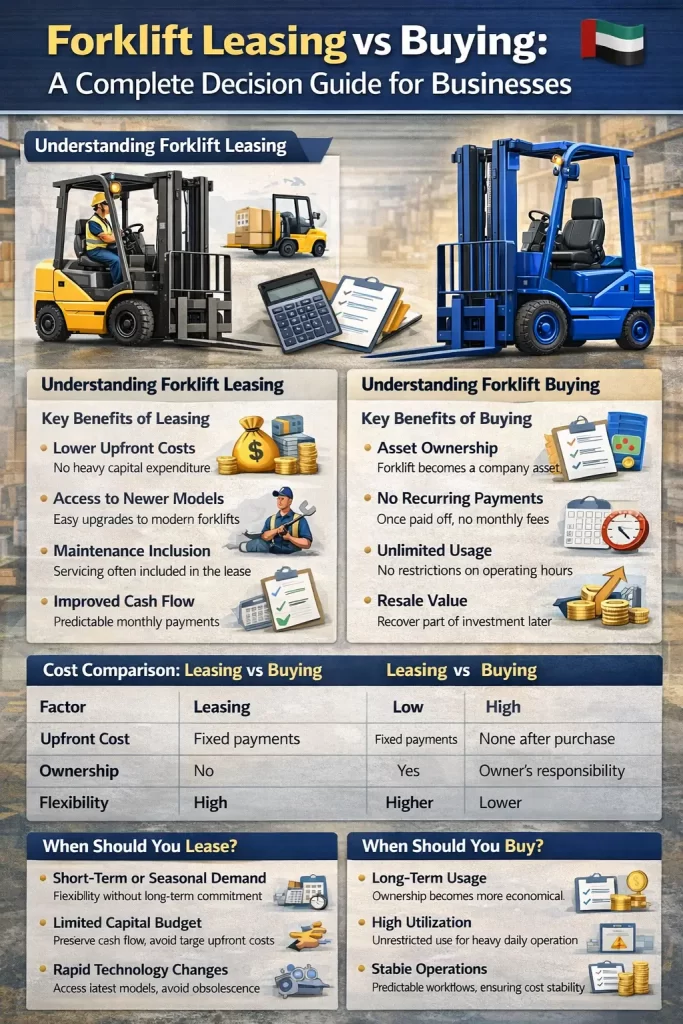
Understanding Forklift Leasing
Forklift leasing is essentially renting equipment for a fixed period, typically ranging from 1 to 5 years. Businesses pay a monthly fee instead of making a large upfront investment.
Key Benefits of Leasing
- Lower upfront costs: No need for heavy capital expenditure
- Access to newer models: Easy upgrades to modern, efficient forklifts
- Maintenance inclusion: Many lease agreements include servicing
- Improved cash flow: Predictable monthly payments
Potential Drawbacks
- No ownership: You don’t build equity in the asset
- Long-term cost: Leasing can be more expensive over time
- Contract limitations: Usage restrictions or penalties may apply
Leasing is ideal for businesses that prioritize flexibility, short-term projects, or rapid scaling.
Understanding Forklift Buying
Buying a forklift means full ownership after a one-time purchase or financed payment plan. This option is typically favored by businesses with stable, long-term operational needs.
Key Benefits of Buying
- Asset ownership: The forklift becomes part of your company’s assets
- No recurring payments: Once paid off, there are no monthly fees
- Unlimited usage: No restrictions on operating hours
- Resale value: You can recover part of your investment later
Potential Drawbacks
- High upfront cost: Significant capital investment required
- Maintenance responsibility: Repair and servicing costs fall on you
- Depreciation: Equipment loses value over time
Buying is best suited for businesses with consistent usage and long-term planning.
Cost Comparison: Forklift Leasing vs Buying
Understanding the financial impact is crucial. While leasing appears cheaper initially, buying may be more cost-effective in the long run.
Leasing Costs Include:
- Monthly rental payments
- Potential service fees
- Early termination penalties
Buying Costs Include:
- Purchase price or loan payments
- Maintenance and repairs
- Insurance and storage
When Should You Lease a Forklift?
Leasing is the right choice if your business aligns with the following scenarios:
1. Short-Term or Seasonal Demand
If your operations fluctuate, leasing allows flexibility without long-term commitment.
2. Limited Capital Budget
Startups or growing businesses can preserve cash flow by avoiding large upfront costs.
3. Rapid Technology Changes
Leasing ensures access to the latest models without worrying about obsolescence.
4. Minimal Maintenance Responsibility
Leasing agreements often include servicing, reducing operational burden.
When Should You Buy a Forklift?
Buying is more beneficial under these conditions:
1. Long-Term Usage
If you plan to use the forklift for many years, ownership becomes more economical.
2. High Utilization
Businesses with heavy daily usage benefit from unrestricted operation.
3. Stable Operations
If your workflow is predictable, buying ensures cost stability.
4. Asset Building
Owning equipment strengthens your balance sheet and business valuation.
Operational Considerations Beyond Cost
While cost is important, operational efficiency should also guide your decision.
Maintenance and Downtime
- Leasing: Often includes maintenance support
- Buying: Requires in-house or outsourced servicing
Flexibility and Scalability
- Leasing: Easy to upgrade or return equipment
- Buying: Less flexible but stable
Tax Implications
- Leasing: Payments may be treated as operating expenses
- Buying: Depreciation benefits may apply
These nuanced considerations align with semantic search principles, where content depth and contextual relevance improve rankings.
Forklift Leasing vs Buying: A Quick Comparison Table
| Factor | Leasing | Buying |
|---|---|---|
| Upfront Cost | Low | High |
| Monthly Expense | Fixed payments | None after purchase |
| Ownership | No | Yes |
| Maintenance | Often included | Owner’s responsibility |
| Flexibility | High | Low |
| Long-Term Cost | Higher | Lower |
Expert Tip: Hybrid Approach
Some businesses benefit from a hybrid strategy:
- Lease forklifts for short-term or peak demand
- Buy forklifts for core, long-term operations
This approach balances flexibility with cost efficiency and is increasingly adopted in logistics and warehousing industries.
Final Verdict: Which Option Is Right for You?
There is no one-size-fits-all answer. The right choice depends on your business goals, financial situation, and operational needs.
Choose Leasing If:
- You need flexibility
- You want low upfront costs
- Your business is growing or unpredictable
Choose Buying If:
- You want long-term savings
- You have consistent usage
- You prefer asset ownership
Conclusion
The decision between Forklift Leasing vs Buying is ultimately strategic. Leasing offers flexibility and lower initial costs, while buying provides long-term value and ownership benefits.
To ensure safe operations, businesses should follow proper forklift safety guidelines when evaluating equipment usage.