Power Up Your Port and Warehouse Operations with ARAS Electric Reach Stacker
ARAS supplies electric stackers built for the heavier end of port and yard work, and operators from Jebel Ali to Fujairah are already using them to handle containers and palletised freight more cheaply.
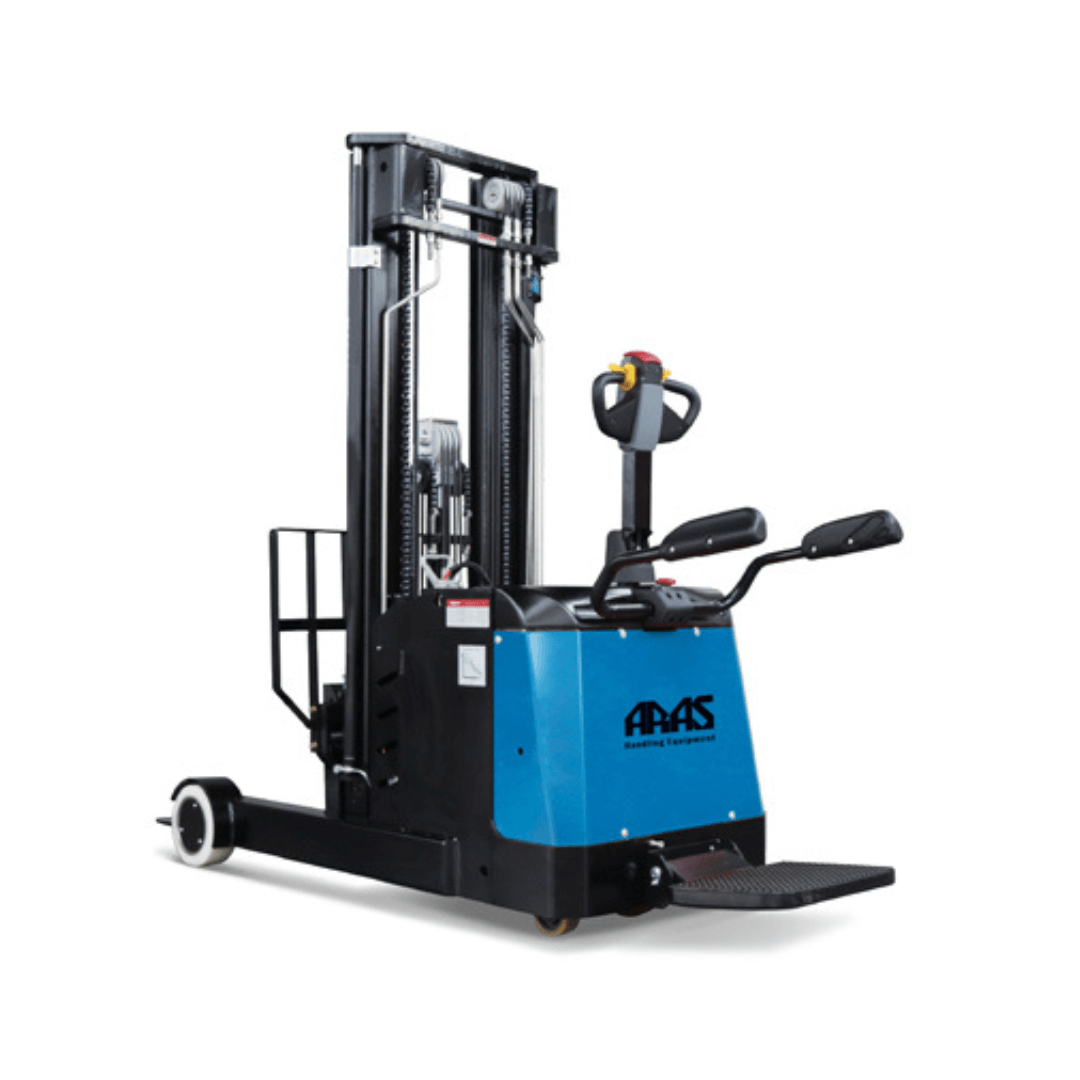
Electric container and pallet handling for UAE logistics
Running a logistics operation in the UAE means watching three things at once: cost per move, uptime, and the growing pressure to cut emissions. An electric reach stacker helps on all three. ARAS supplies electric stackers built for the heavier end of port and yard work, and operators from Jebel Ali to Fujairah are already using them to handle containers and palletised freight more cheaply.
From JAFZA’s logistics hub to Khalifa Port and industrial sites across the UAE, a reliable, energy-efficient electric reach stacker is a real upgrade for your material handling operation.
What the ARAS electric reach stackers give you. High lifting capacity sized for real container work, long battery life with fast-charge options so the machine is ready when the shift is, and a full set of operator-safety features as standard. We will help you match capacity, mast and battery to the way your yard actually runs.
Why Choose ARAS Electric Reach Stacker?
Diesel is one of the largest line items in any materials-handling budget. An electric reach stacker removes the fuel bill entirely, and that money goes back into the business rather than into a tank.
No fuel, lower running cost
With no diesel to buy, the cost per container moved drops sharply, and electricity is both cheaper and more predictable than fuel.
Zero tailpipe emissions
As UAE environmental rules tighten, an electric stacker keeps you on the right side of them and makes covered-yard and indoor work far cleaner for the people working nearby.
Throughput when it counts
Strong hydraulics, precise control and quick handling cycles keep loads moving through peak periods instead of becoming the bottleneck.
Less downtime
An electric drivetrain has fewer moving parts than a diesel one, so there is less to service and fewer unplanned stops.
Comfort and safety for the operator
A driver who is not worn down by noise and vibration works more safely and gets more done. The electric stacker runs quieter and smoother than a diesel machine, which cuts fatigue across a shift and helps with overall safety on your site.
One machine, several names: electric stacker, walkie stacker, ride-on stacker
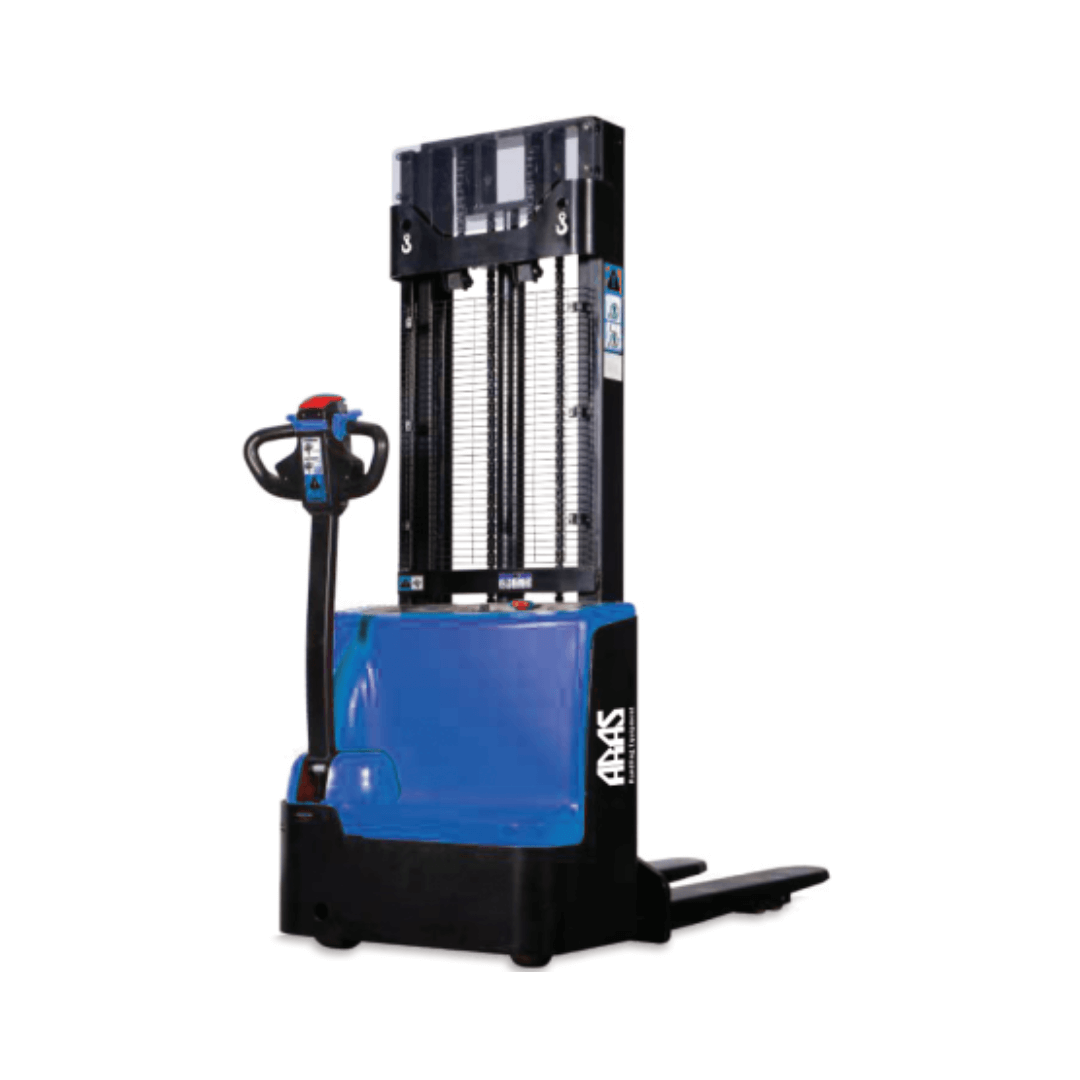
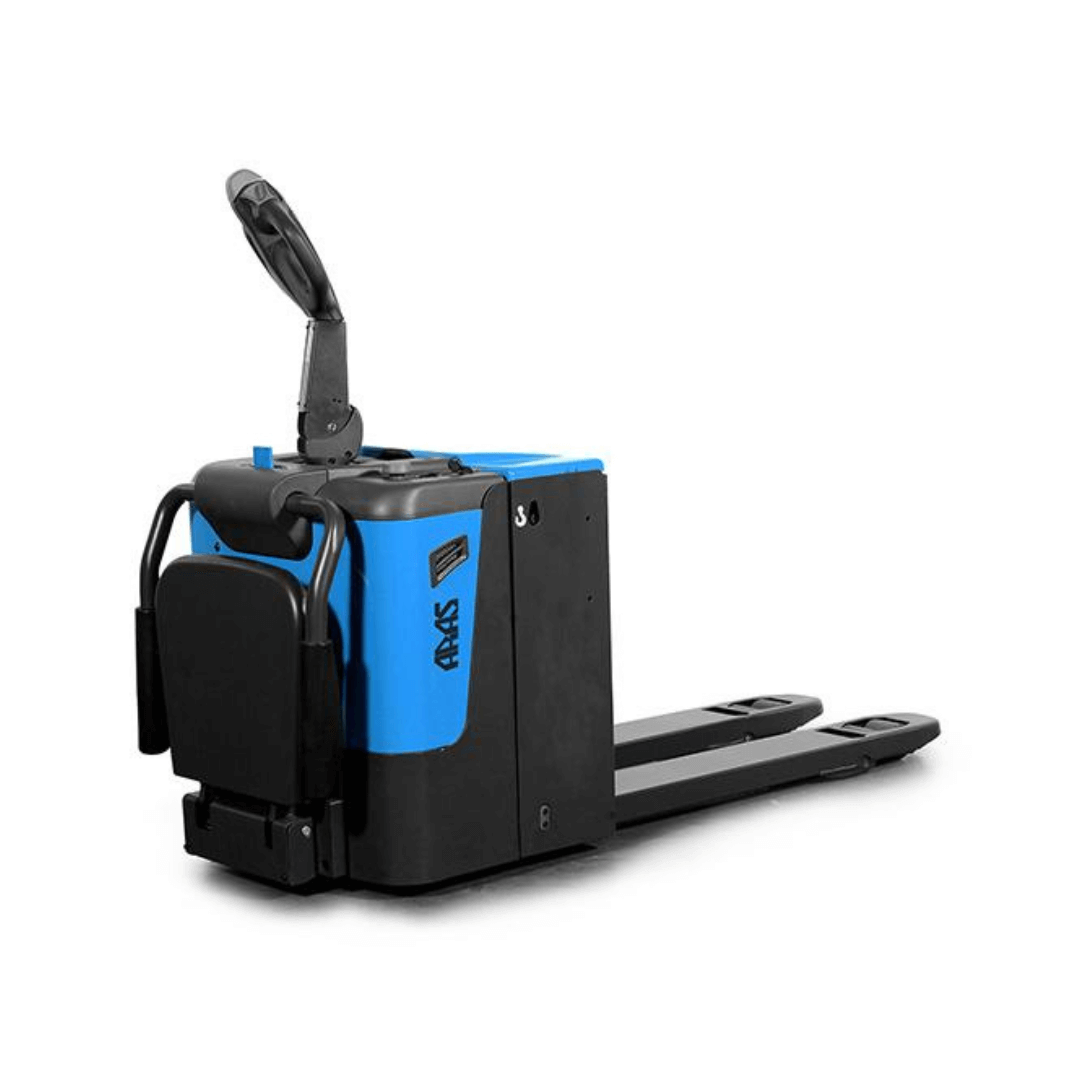
Most UAE buyers simply type “electric stacker” and land on machines with very different price tags. The family splits two ways. Walk-behind models such as the SWS-1000 walkie stacker suit smaller stores and shorter runs. Ride-on models such as the Soosung SWR reach stacker keep an operator productive across a bigger floor all shift. Both lift comfortably to the heights most UAE stockrooms use. Past roughly five metres of racking, step up to an electric reach truck instead. ARAS Developments FZE keeps both stacker types in stock at Jebel Ali Free Zone and responds to every enquiry the same working day.
Walkie or ride-on: how to pick between them
The decision usually comes down to three questions. How far does the machine travel in a shift, how many pallet moves does it make per hour, and who is driving it?
If your stacker covers short runs in a compact store, say under 40 or 50 moves a day within a few hundred square metres, a walkie such as the SWS-1000 does the job at the lowest cost. The operator walks with the machine, which is fine for occasional lifting but tiring as a full-time task. Walkies also squeeze into the tightest corners, since there is no operator platform adding length.
Once the machine runs most of the day across a larger floor, the ride-on pays for itself. An operator standing on a platform covers ground three to four times faster than one walking, and finishes the shift far less worn out. The Soosung SWR ride-on adds reach legs to that, letting the forks extend into racking, so pallets sit deeper and aisles stay narrower than a counterbalance machine would need. If a driver spends more than half their shift on the machine, the ride-on is nearly always the right call.
Racking height and what the stacker can actually lift up there
A detail that catches buyers out: lifting capacity drops as the mast extends. A stacker rated 1,000 kg at floor level might safely place 600 kg or less at full height. This residual capacity figure matters more than the headline rating, because your heaviest pallet at your highest beam is the number the machine has to handle every day.
As a working rule for UAE warehouses, stackers are comfortable up to about four or five metres of racking. Beyond that, mast flex and the residual capacity drop make an electric reach truck the safer, faster choice. Bring us your beam heights and your heaviest pallet weight and we will tell you honestly which side of that line you fall on.
Batteries and charging: the part that decides your shift pattern
Most stackers in this class run either an AGM battery or lithium-ion. AGM costs less upfront, needs a dedicated charging period, and suits single-shift work where the machine rests overnight. Lithium charges faster and tolerates opportunity charging, meaning short top-ups during breaks, so one machine can stretch across longer days or split shifts without a spare battery.
The mistake to avoid is buying the cheaper battery for a two-shift operation. A stacker that runs out mid-afternoon does not save money, it just moves the cost into waiting time. Tell us your working hours and we will size the battery to them.
Floors and aisles
Stackers want smooth, level concrete. Small polyurethane wheels that make them so manoeuvrable indoors do not cope with broken yard surfaces or steep ramps. Aisle-wise, a walkie stacker typically turns in around 2.2 to 2.5 metres depending on pallet size, and ride-on models need a little more. If you are planning new racking, fix the machine first and set the aisles to it, not the other way round.
Stacker or reach truck?
The short version: racking under roughly five metres and moderate daily throughput favours a stacker, while taller racking, heavier pallets at height, or all-day intensive putaway favours an electric reach truck. We have written a fuller comparison in our reach truck vs reach stacker guide if you are weighing the two seriously.
What electric stackers cost in the UAE
Semi-electric stackers, which power the lift but leave travel to the operator, start from AED 8,500 and suit light, occasional use. You can read more on our semi-electric stacker page. Fully electric ride-on reach stackers such as the Soosung SWR1300L start from AED 54,000. Between those two points sit the walkie models, priced by capacity, mast height and battery. Every quote is confirmed the same working day.
Model Specifications
Frequently Asked Questions
Why go electric for a reach stacker?
Does electric mean less power?
Will it cope with a full working shift?
Do you supply and service across the UAE?
Is a reach stacker the same as a reach truck?
Customers We Served










Product literature
Related equipment
Tell us what you need to move
Send the load, the lift height and the aisle width you are working with, and ARAS will come back with the right model, current stock and a delivered price.