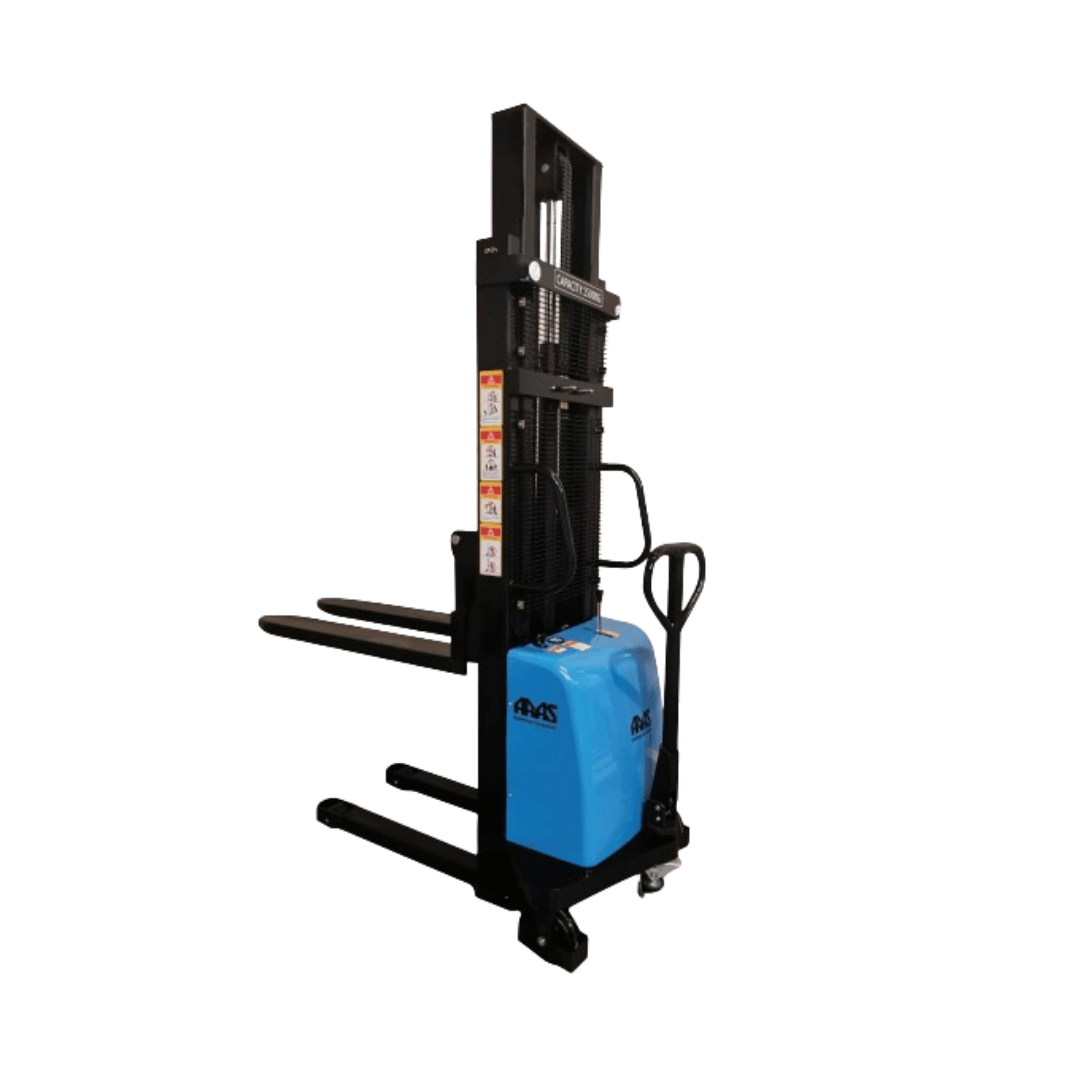
Semi Electric Stacker
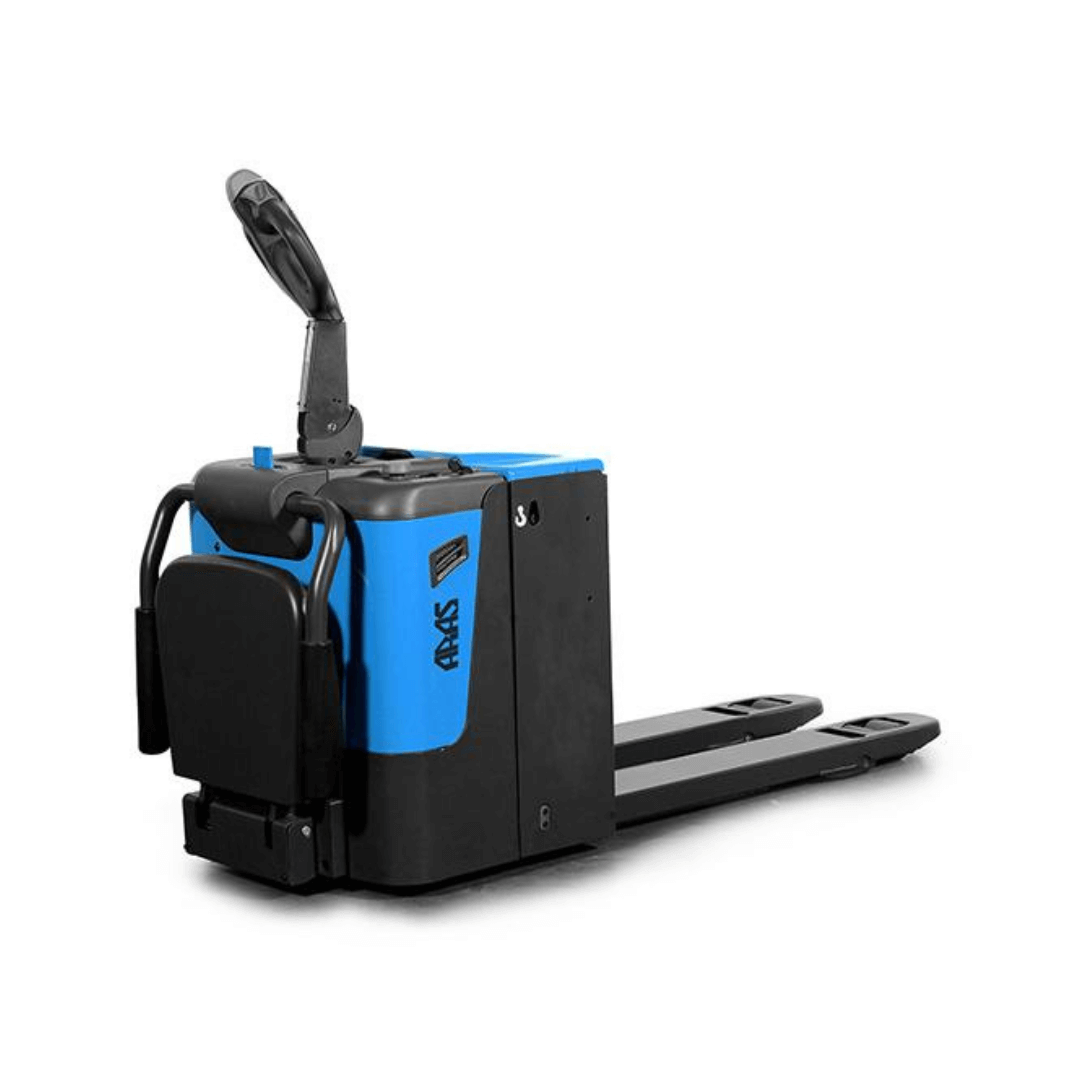
Powered lift, manual travel. The unit that fills the gap between a hand pallet truck and a full electric ride-on stacker.
At a glance
- 1.5 Ton capacity and lifting height upto 3500 mm.
- Maintenance free battery.
- Straddle leg option Available.
- Rugged Design.
Where a semi-electric stacker fits
Most warehouses end up with a gap in their equipment. A hand pallet truck is fine for moving a pallet across the floor, but it can’t lift anything to a height. A full electric ride-on stacker handles everything, but it’s a bigger spend and more than a lot of operations actually need. The semi-electric stacker sits in that gap. The mast lifts under power, so putting a 1.5-tonne pallet onto a racking beam at 3.5 metres takes no real effort, while the operator still pushes and steers the unit by hand. For a business lifting to height a few times an hour rather than constantly, it is usually the sensible buy.
We see it used a lot in JAFZA storage units, smaller distribution operations and production stores around Dubai, places that need to reach the second or third beam of their racking but are not running a forklift fleet. The maintenance-free battery is part of the appeal there. There is no acid to check and no water to top up, so the unit does not need someone keeping an eye on it; it charges from a normal supply and gets on with the work.
The straddle-leg option
The standard stacker has its support legs set under the forks, which works for open-bottom pallets. If you are handling closed-bottom pallets, stillages or loads sitting on a base, the straddle-leg version has its legs set wider so they pass around the load instead of fouling it. It is worth telling us what you are actually lifting before you order, because the wrong leg configuration is the most common reason a stacker does not suit the job.
Before you decide
Two things are worth checking. First, the load centre, capacity ratings assume the weight sits a standard distance from the mast, and a deep or unevenly loaded pallet reduces what the stacker can safely lift. Second, how often you will lift to full height during a shift; if it is most of the day, the manual pushing starts to add up and a fully electric or ride-on model will be easier on your team. Send us your pallet sizes, your racking heights and a note on your floor, and we will tell you straight whether this is the right unit or whether you should step up.
Weighing up semi-electric against a fully manual unit? Our manual forklift guide covers what hand-powered trucks do well and where powered lifting earns its keep.
What a semi-electric stacker costs
Our semi-electric stackers start from AED 8,500. The figure depends on lift height and capacity, and whether you want the powered lift with manual travel or a fully electric unit. Tell us the height you need and how often it will run and we will confirm the exact price the same working day.
Model Specifications
On the live page this table is searchable and sortable.
Frequently Asked Questions
How is a semi-electric stacker different from a fully electric one?
How much does it lift, and how high?
Does the battery need much looking after?
Can ARAS deliver and service it anywhere in the UAE?
Customers We Served











Related equipment
Tell us what you need to move
Send the load, the lift height and the aisle width you are working with, and ARAS will come back with the right model, current stock and a delivered price.