Walk into any material-handling showroom and the choice can feel overwhelming: counterbalance forklifts, reach trucks, stackers, articulated trucks, pallet movers, tow tractors. The reassuring part is that picking the right one is less about the badge on the machine and more about three numbers and one honest look at how your warehouse actually works.
Start with three numbers
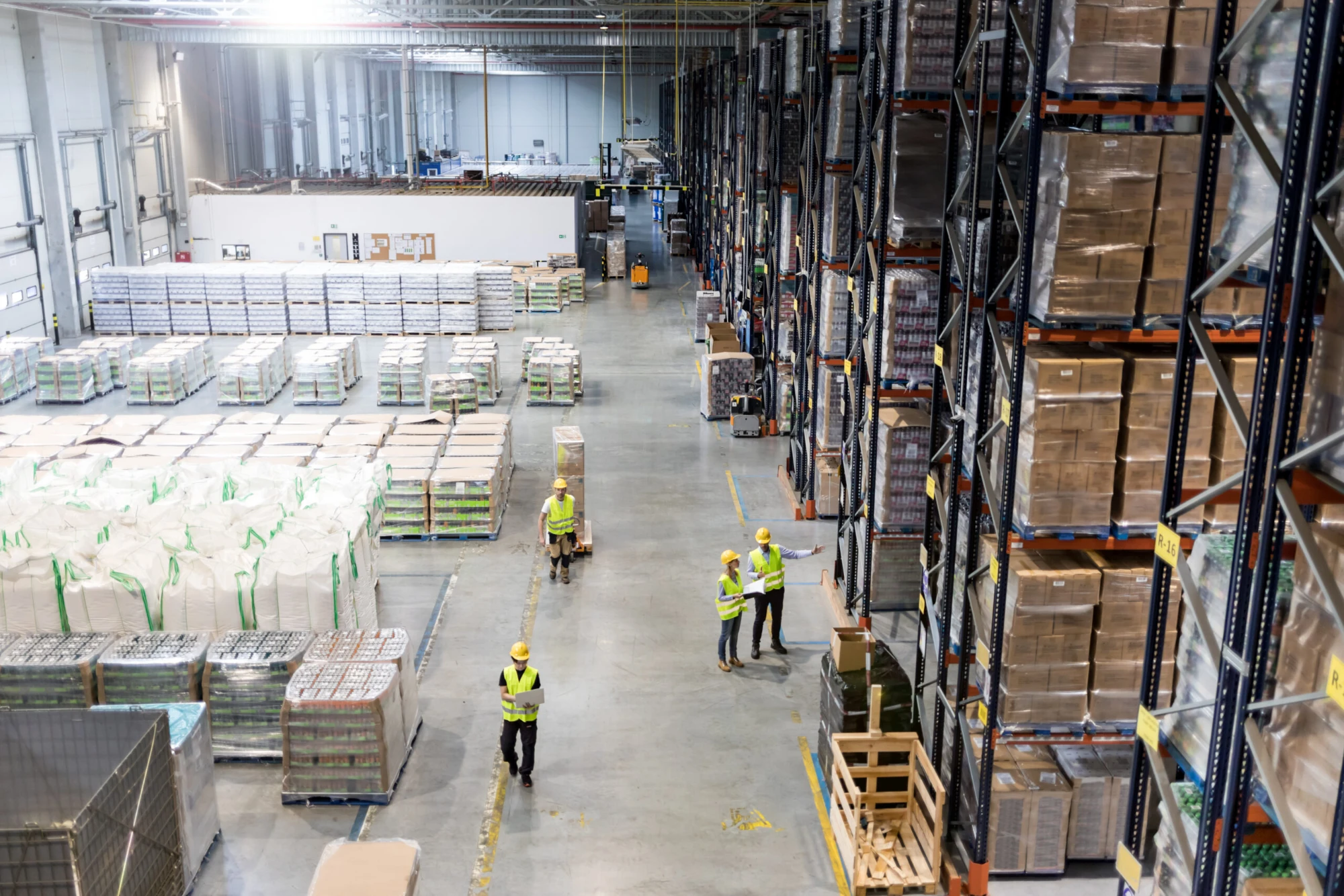
Before you compare a single brochure, write down three things: your aisle width, your top beam height (how high you genuinely need to lift), and your heaviest typical load. Almost every sensible recommendation falls out of those. Wide aisles and ground-level work point one way; narrow aisles and tall racking point somewhere else entirely. Get them wrong and you either buy far more truck than you need, or (worse) one that physically cannot do the job.
The counterbalance forklift: the all-rounder
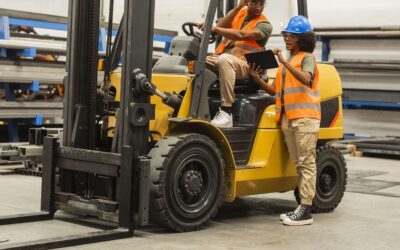
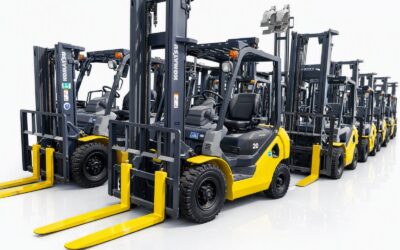
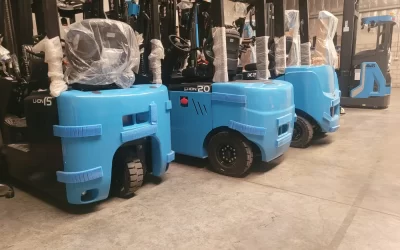
The classic counterbalance forklift is the default for good reason. It needs no special racking, handles indoor and outdoor work, and copes with a wide range of loads. If your aisles are reasonably generous and you are not chasing height, it is usually the simplest and most flexible choice.
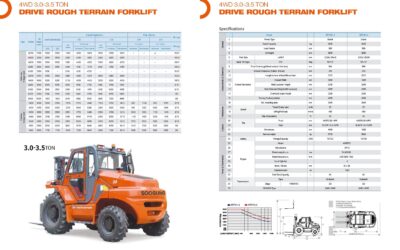
The decisions within the category are power and tyres. For clean indoor work, an electric model like the SBF-A runs quiet and emission-free; for heavy multi-shift use, the lithium SBF-Li usually earns its premium. And if your ground is broken (construction sites, sand, gravel) you want a rough terrain forklift rather than a standard one.
The reach truck: when you go vertical
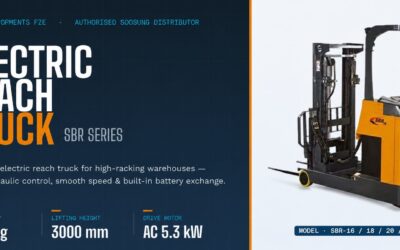
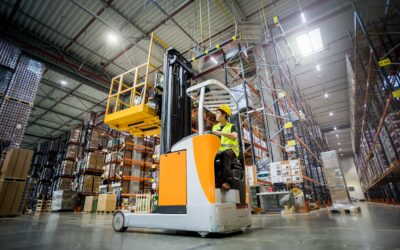
Once racking climbs past what a counterbalance can reach, a reach truck takes over. It works in much narrower aisles and lifts to eight, ten or more metres, which is how warehouses pull more storage out of the same floor. The trade-off is that it is an indoor specialist that wants smooth concrete.
The sub-choice is seated versus stand-up. A seated model like the CQD suits long, continuous high-bay shifts; a stand-up reach truck suits stop-start work with frequent dismounts. Neither is better outright. They simply fit different rhythms of work.
The pallet stacker: the affordable step up
Plenty of operations sit between a pallet truck and a forklift: they need to lift onto racking, but not high, and not all day. That is stacker territory. A ride-on stacker keeps the pace up on busier floors, while a walk-behind stacker is the compact, budget-friendly way into powered stacking for a small warehouse or stockroom.
The articulated truck: one machine, two jobs
If floor space is expensive and you currently run a counterbalance to unload lorries plus a reach truck to put pallets away, an articulated forklift can replace both. It works outside and inside, folds into very narrow aisles, and lets you tighten the racking to win back pallet positions. It shines in dense, fixed-footprint warehouses, and makes far less sense if you mostly shuffle loose loads around a yard.
Don’t forget horizontal movement
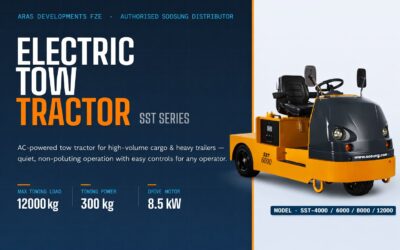
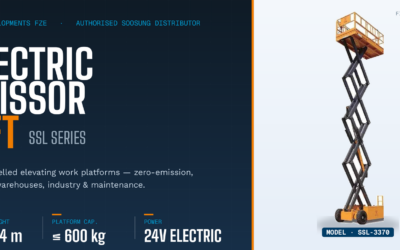
Not every job is about lifting. If your team spends the day moving pallets over long distances, a rider pallet mover beats walking a manual truck all shift. And on large sites with repetitive internal routes, a tow tractor pulling a train of trolleys replaces a fleet of forklift shuttle runs.
What the UAE adds to the decision
A few things matter more here than in a cooler climate. Heat and dust are hard on batteries and engines, so charging-area ventilation and a sensible service schedule are not optional extras. Sites can be a long way apart, and a breakdown in a remote yard is an expensive callout, which makes local parts and quick service support a genuine part of the buying decision, not an afterthought. And for indoor work, the air-quality and noise benefits of an electric truck are worth more in a busy, enclosed UAE warehouse than the spec sheet lets on.
Still weighing two options? That’s normal
Most buyers land between two machines, and the right call usually turns on details a brochure cannot capture: how your team actually works, where the bottleneck really is, and what you are planning for next year rather than just today. If you would like a straight, no-pressure recommendation, talk to the ARAS team or browse the full Soosung range. We stock across every category above, so we have no reason to nudge you toward one when another genuinely fits better.