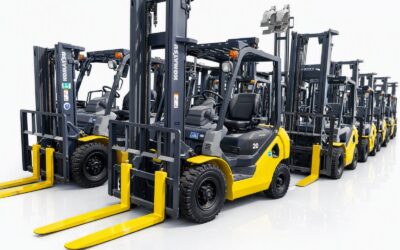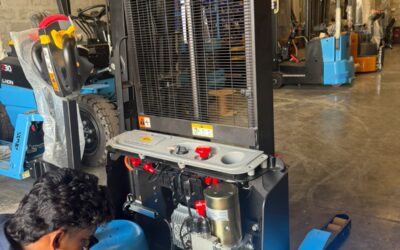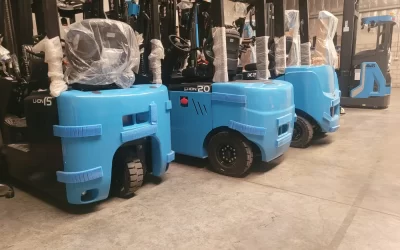
A distribution operator in the UAE, often a third-party logistics (3PL) or wholesale business running a single large shed in Jebel Ali or Dubai Industrial City, comes to us with two problems at the same time. Their diesel counterbalance forklifts are getting old and expensive to keep running, and they have run out of room to store pallets without renting more space.
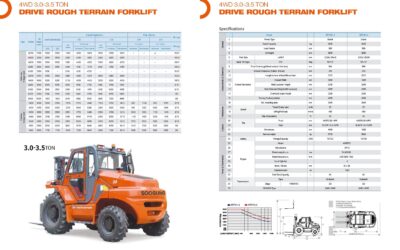
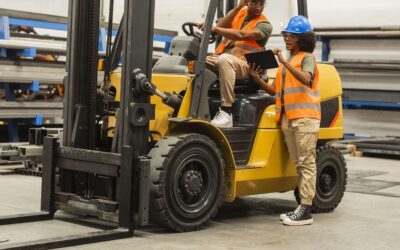
Both problems usually trace back to one thing: the trucks are too big for the building. A diesel counterbalance forklift needs roughly 3.5 to 4 metres of clear aisle to turn and stack. That width is dead space, because you cannot put racking there. Running a combustion engine indoors adds a second cost, especially in a part-enclosed or temperature-controlled shed, where exhaust, heat and ventilation become a daily concern.
What we look at first
Before we recommend anything, we measure. The number that decides the whole project is the aisle width the racking layout can support. From there we work backwards: how high you need to lift, how many pallet movements per hour at peak, single or multi-shift, and what is already installed that we have to work around.
The site visit matters more than the spec sheet. Two warehouses of the same floor area can need completely different trucks, depending on rack height, floor condition and how the loading bays are laid out.
The equipment that usually solves it
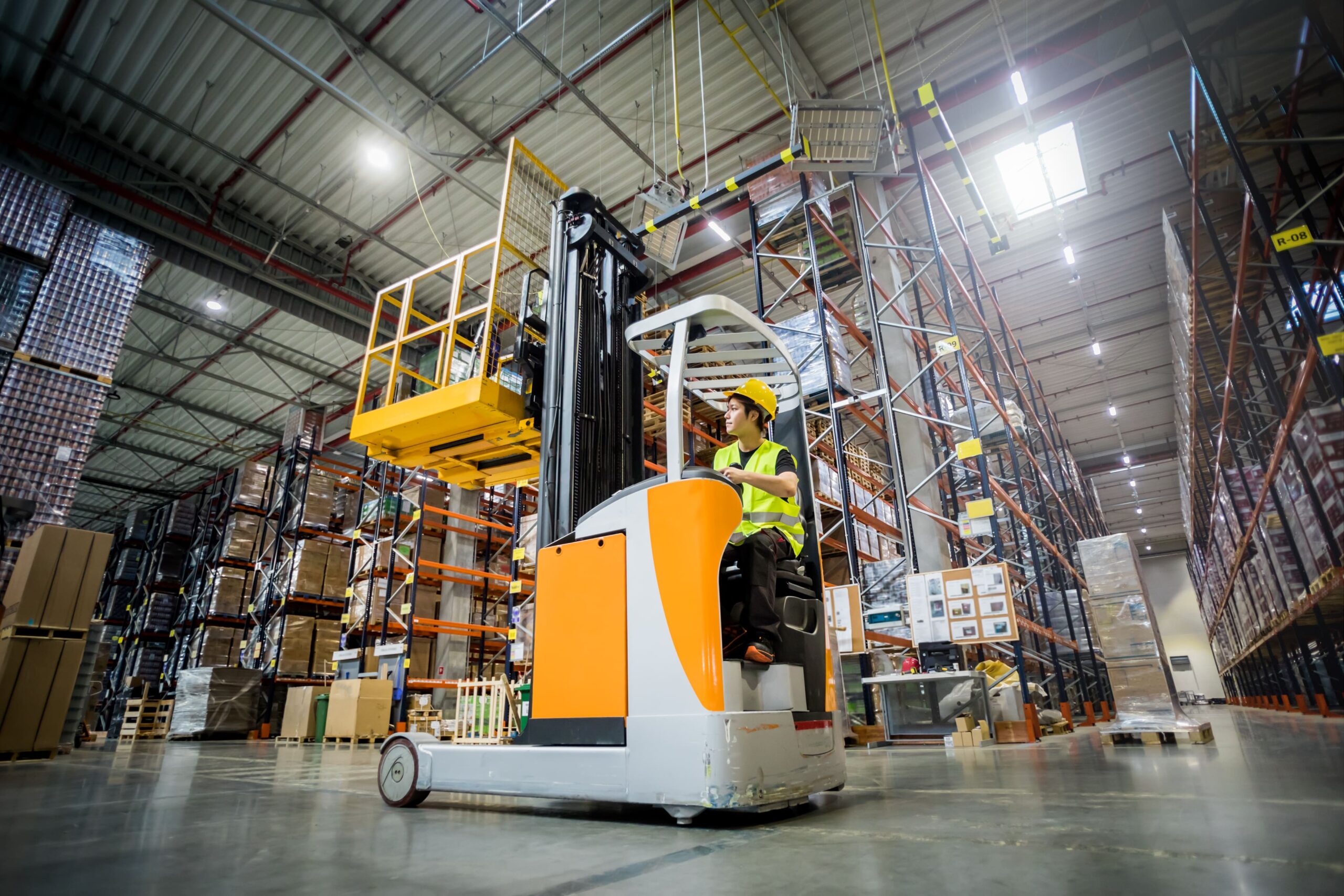
For the narrow-aisle problem, an articulated forklift changes the maths. It works in aisles of around 1.6 to 2 metres, less than half what a counterbalance truck needs. Reclaiming that aisle space and adding rack rows can raise storage density in the same footprint by roughly 30 to 50 percent, depending on the layout. For most operators that is the difference between renting a second unit and staying where they are.
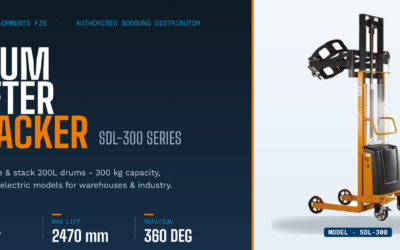
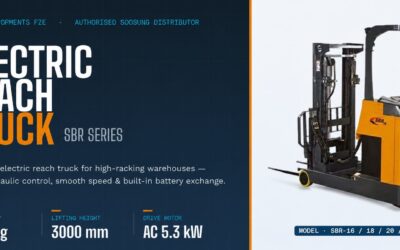
Where the racking is tall rather than tight, an electric reach truck does the lifting and reaches the upper beams a counterbalance truck cannot. Many sites end up with a small mixed fleet: an articulated truck for the narrow aisles, a reach truck for height, and a pallet stacker or two for the bays and staging areas.
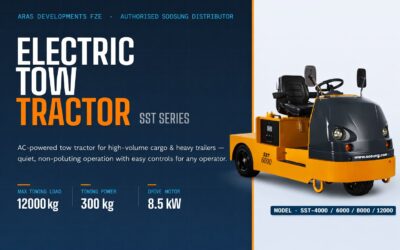
All of it runs on electric drive. Where the operation runs long or multiple shifts, we specify lithium batteries with opportunity charging, so operators top up during breaks and shift changes instead of swapping batteries. The truck stays available across the day without a second battery and a charging room.
What changes for the operator
The diesel goes away, and with it the indoor exhaust and the fuel bills. The building holds more pallets without getting any bigger. The fleet runs quieter, which matters in a shared or residential-adjacent zone. Because the equipment is Soosung, which ARAS distributes and stocks at JAFZA, parts and service stay local rather than a container away.
We also quote in dirhams, up front. You see the price band before you commit, and there is a working machine you can come and test-lift with your own pallet before you buy.
When electric is not the answer
Electrification is not automatically the right call for every site. If a yard runs mostly outdoors, moves containers, or lifts very heavy single loads, diesel or a larger counterbalance truck can still be the sensible choice, and we will say so. The point of the site visit is to get that decision right, not to sell the biggest fleet.
Ask for a site assessment
If your warehouse is fighting the same two problems, aging diesel trucks and no room to grow, we will come and measure the site and tell you honestly what fits. Call +971 4 887 6602 or email sales@arasfze.com to arrange a visit.